
Ten years ago, someone looking for more information on a topic or a solution to a problem almost certainly Googled it. But in late 2024, Google’s worldwide search engine market share dropped below 90% for the first time since 2015, with Bing and other platforms each absorbing parts of this market share. This drop doesn’t account for the searchers turning to platforms outside traditional search either.
Social media, AI engines and Reddit are now where many searchers look for new information first. As in, before Google. 46% of Gen Z and 35% of millennials start their research on social media like TikTok and Instagram. And 37% of consumers begin searches with AI engines.
What “search” means is shifting. And once searchers actually get to Google? That’s different too. The search engine results pages (SERPs) are more crowded than ever. Many of these features, like AI Overviews, are designed to result in zero-click searches. In this new reality, search ads have to work harder than ever to appear in results and capture searchers’ attention.
AI Overviews
The most obvious change to SERPs in the last couple of years is the addition of AI Overviews. These generated answers are showing up on more results pages as of late 2025, and are increasingly triggered by higher-intent keywords traditionally targeted by search advertisers.
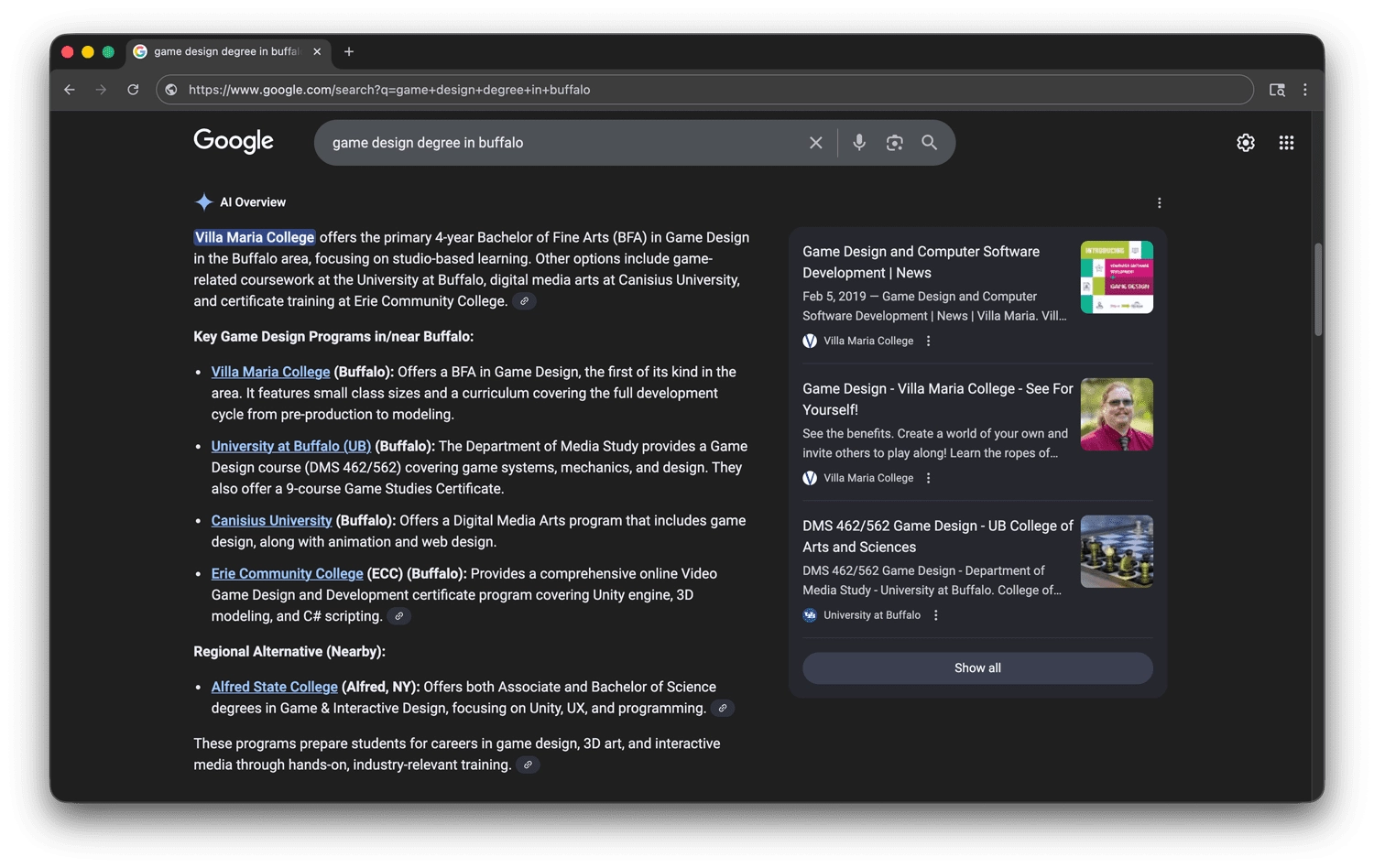
With more AI Overviews at the top of the SERPs, ads and AI Overviews are competing for attention. While ads often come first, AI Overviews sometimes display above the first ads. Ads can also appear in AI Overviews.
Together, AI Overviews and search ads push organic results even further down the SERP. As AI Overview’s zero-click searches decrease organic website traffic, more businesses turn to ads to regain visibility, increasing competition and costs within Google Ads.
Google Ads
Simultaneously, there have been changes to how Google Ads display within the SERPs.
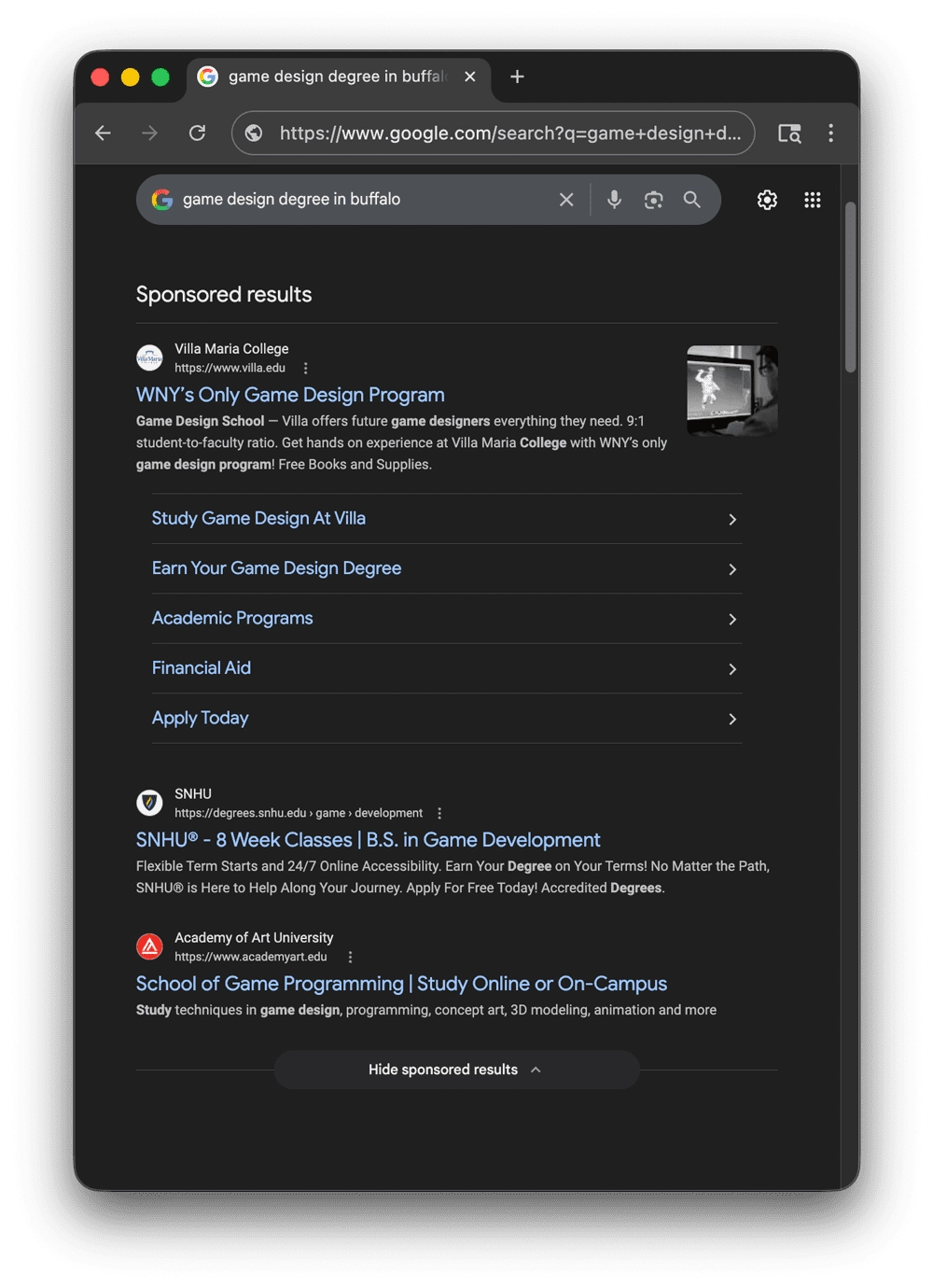
Collapsible Section
Instead of each ad being labeled, they’re all in a collapsible section under a “Sponsored results” headline. How this affects ads isn’t obvious yet—it’s probably specific to individual industries and search intents. On one hand, ads further from the “Sponsored” headline look more like organic results to a distracted searcher. But this new format also gives searchers the option to hide all of the ads in a section.
New Placements and Double Serving
For those of us who have been Googling for a long time, the addition of ads in the middle of a SERP will take some getting used to.
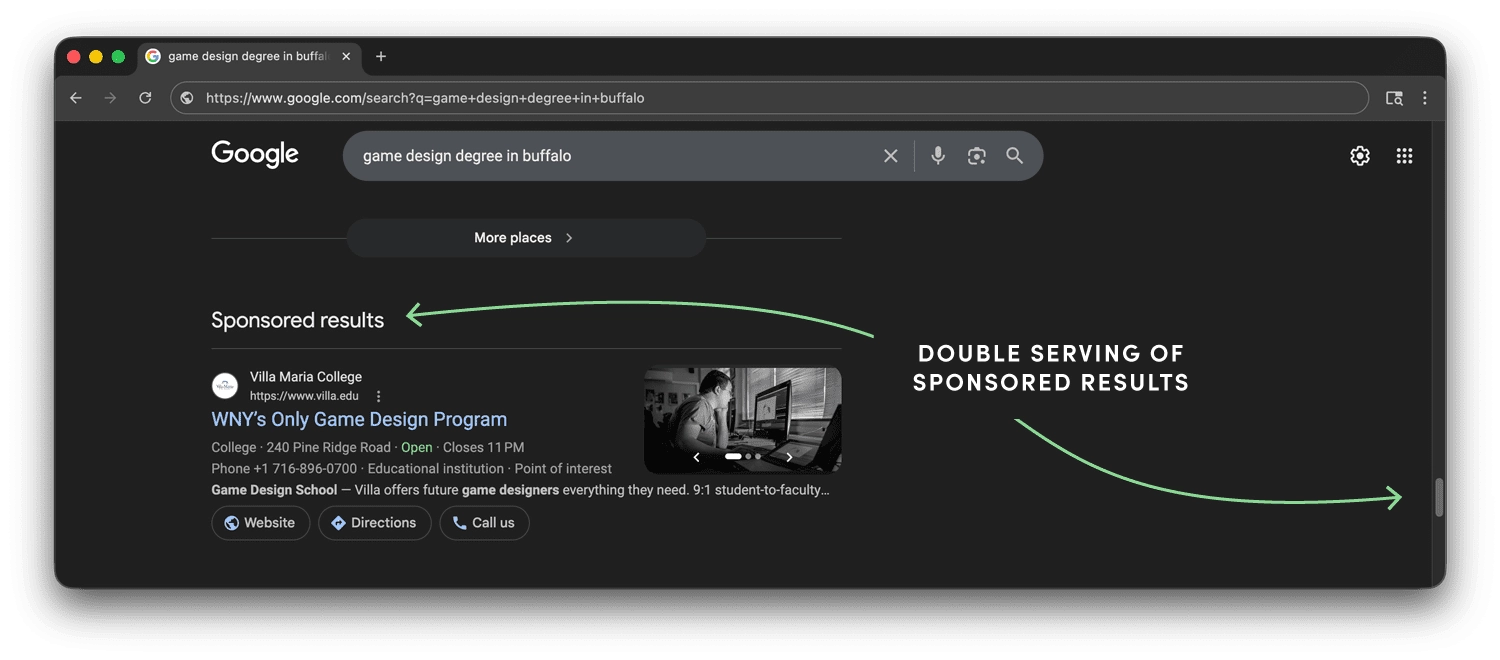
While less obvious to searchers, advertisers are getting used to another change to placements: Google Ads reversed its longstanding policy against a company’s ads showing multiple times on one SERP. Now, one advertiser’s ads could show in multiple spots on a single page, as long as those ads are “meaningfully different.” Advertisers with limited budgets, like small businesses, may feel the effects of more competition, as businesses with more money to spend on search ads take up more ad positions on the page.
What can small businesses do?
All of these changes can feel overwhelming to businesses that have long relied on search ads for ROI. But there’s still room for a strategic approach to ads that delivers results.
Dive into your existing digital data
- Understand where website traffic is coming from.
- Map how visitors interact with your platforms (ads, social accounts, website, etc.).
- Compare what messaging and ads perform best under different conditions.
Test everything
- Increase your presence on the platforms where your potential clients are searching now with diversified ads, GEO, and other tactics.
- Try different messaging in your ads and landing pages, ensuring your ads are closely aligned with search intent.
- Optimize those landing pages for conversions.